
Last updated November 24, 2026
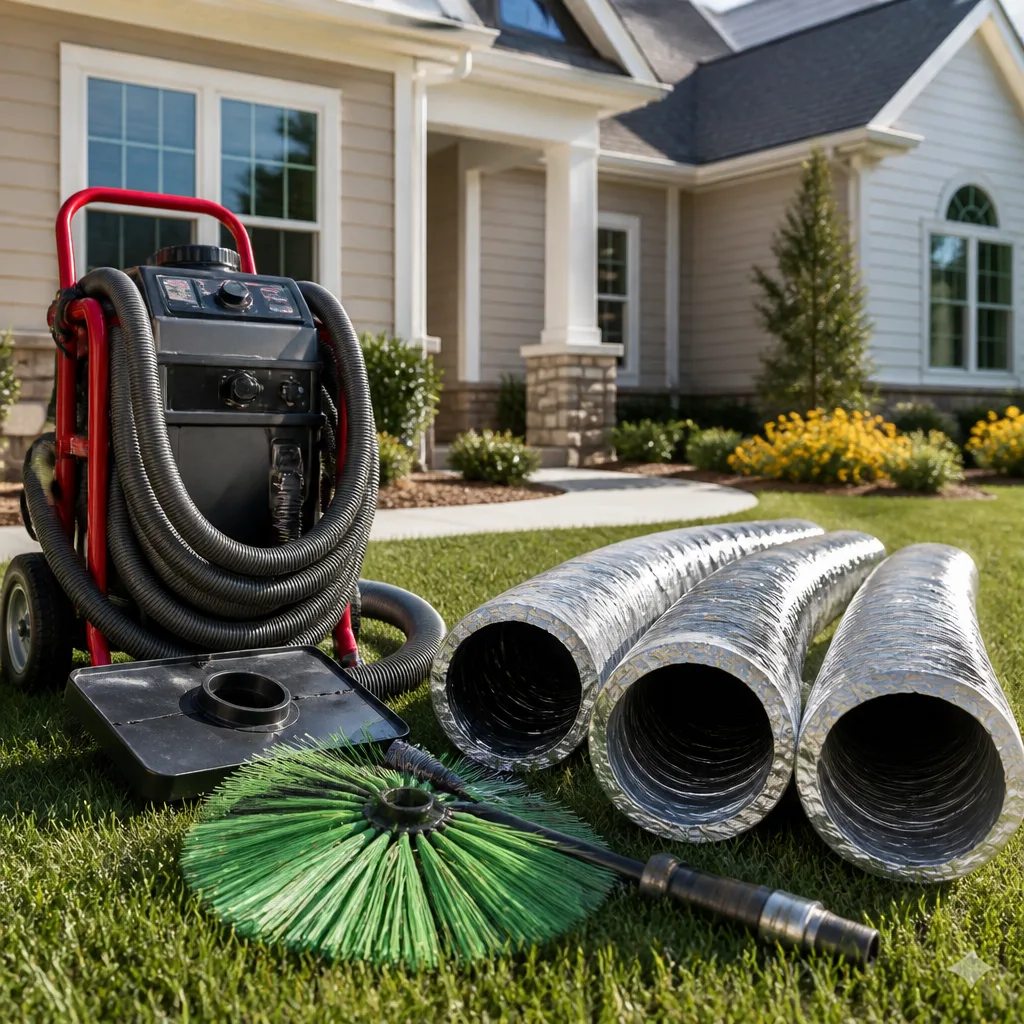 Whole-home duct cleaning
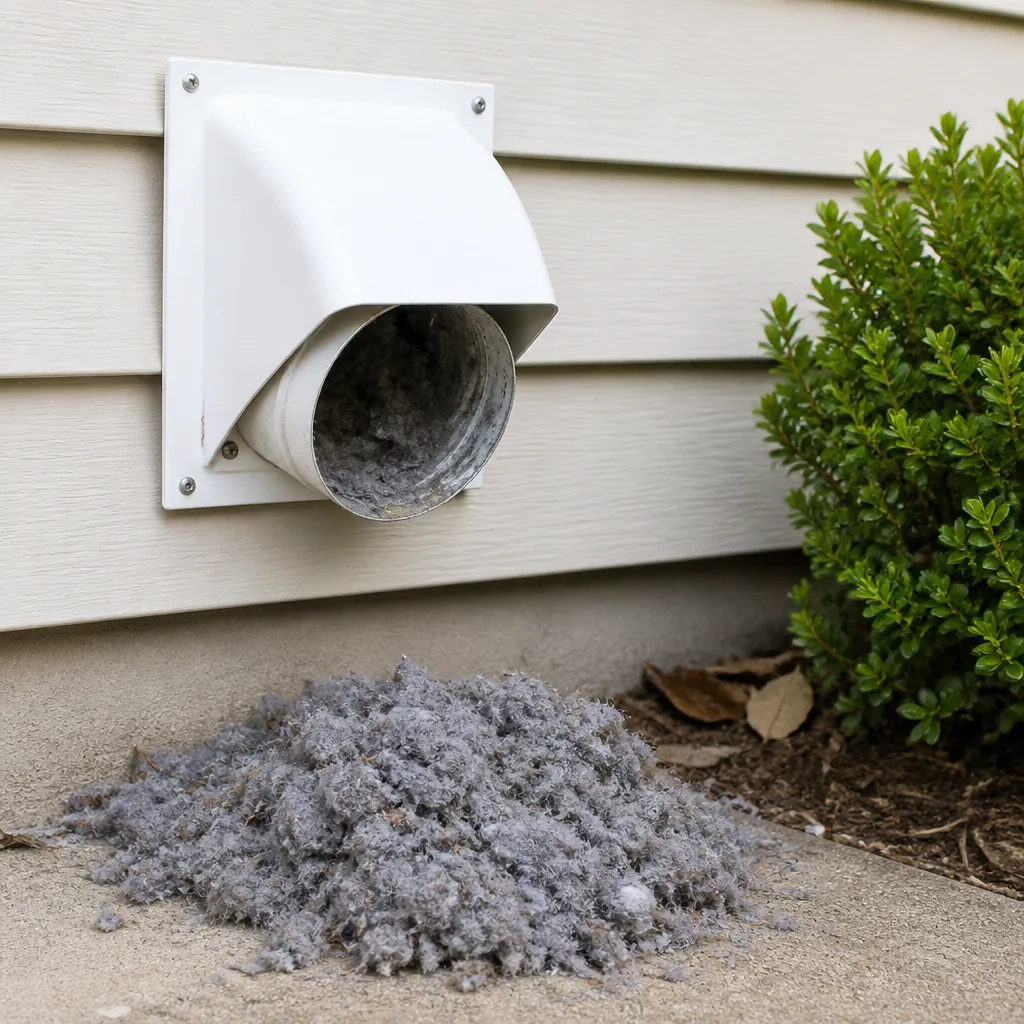 Dryer vent cleaning
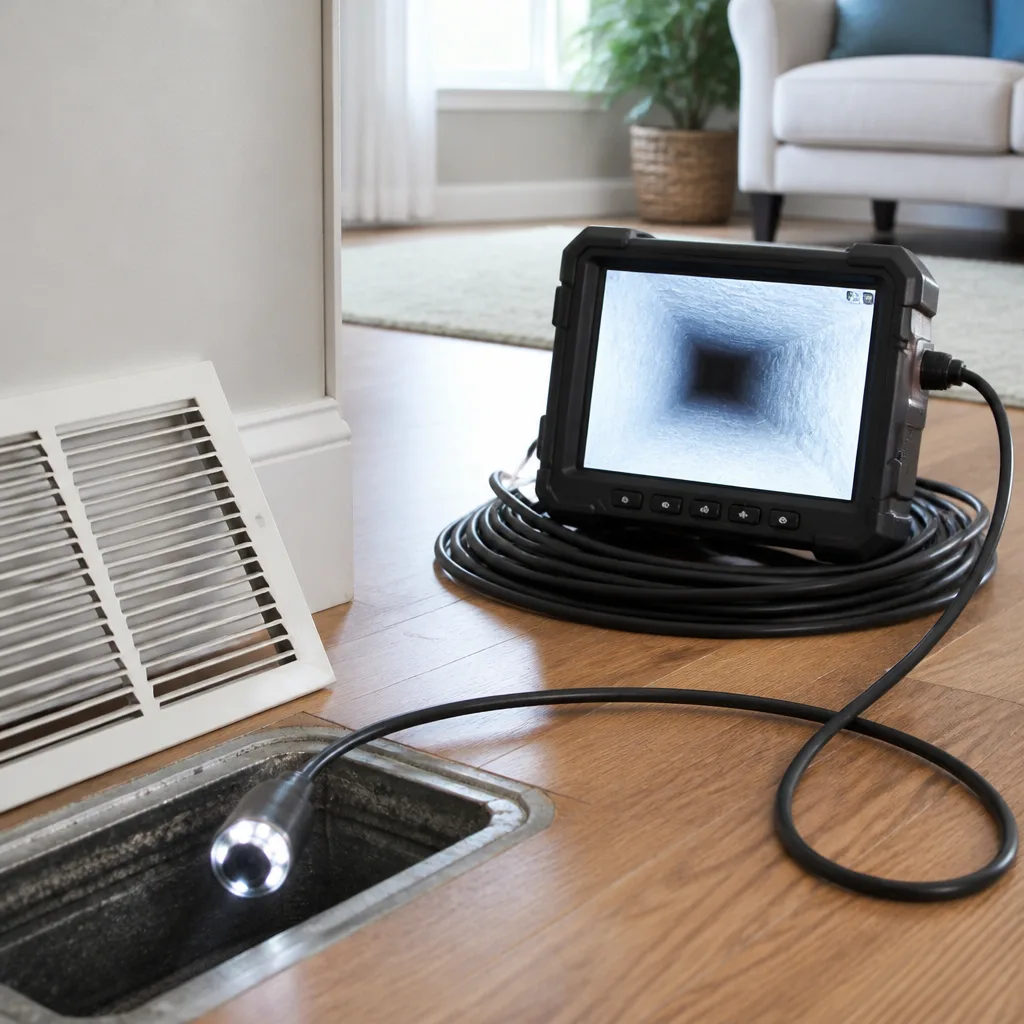 Camera inspection
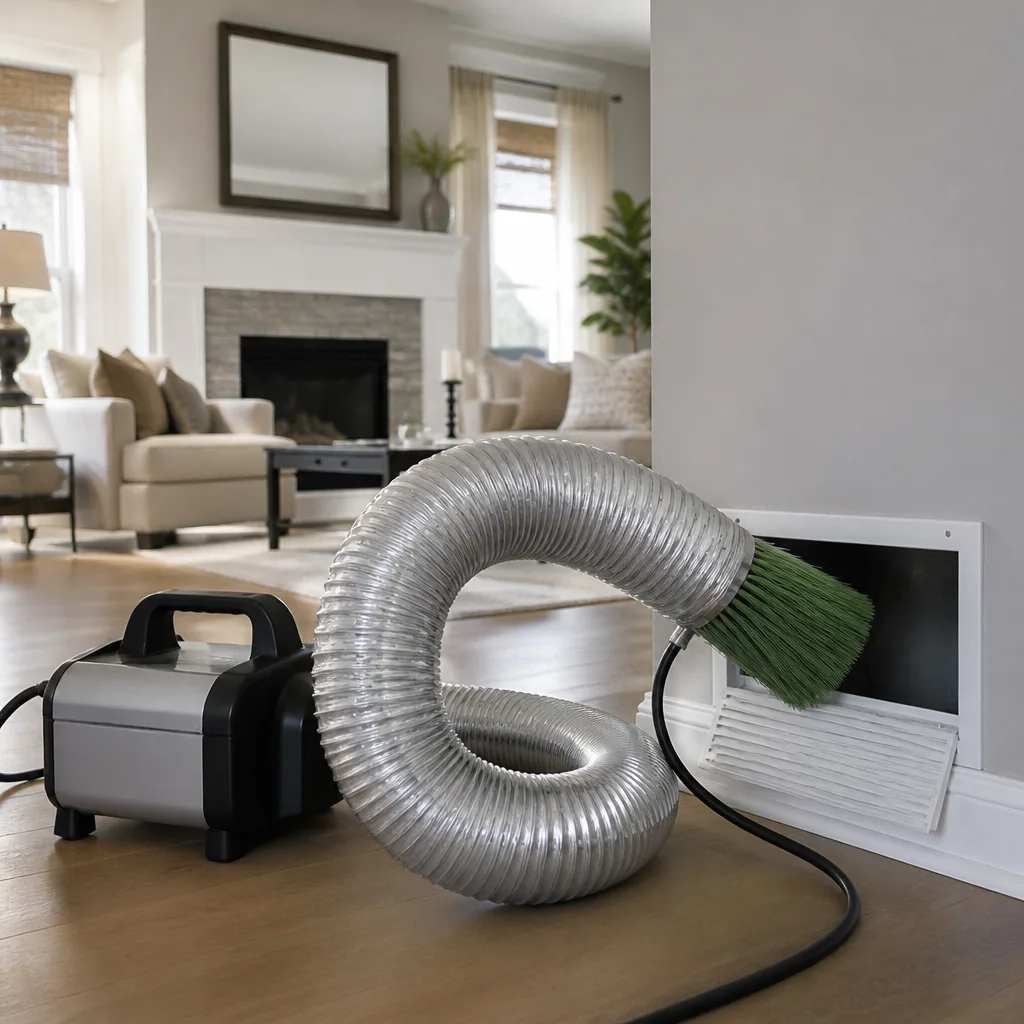 Sanitizing & deodorizing
Whole-system duct and dryer vent check with before-and-after photos - you see exactly what came out of your vents
That "$99 whole-house special" is a bait ad - the real number appears once they are in your hallway, or the "clean" is a shop-vac at the register. We photograph the inside of your ducts before and after instead.
Air Duct Cleaning Maintenance Checklist for Riverton Homeowners
Most duct maintenance checklists online were written to fill space, not to prevent problems. They tell you to change your filter every 90 days without explaining that in Riverton’s inversion months, that interval can be half that – and skipping it doesn’t just hurt your air quality, it accelerates blower motor wear. A filter that’s choked with dust forces the blower to pull harder for the same airflow, and that extra strain shows up as heat in the motor windings and a shorter service life.
This checklist is built differently. It’s organized around the maintenance gaps that actually cause Riverton duct systems to fail early, sorted by who does the task (you or a professional) and how severe the consequence is if it slips. You’ll get a monthly routine, a twice-a-year inspection list, professional intervals, Riverton-specific triggers that override the standard schedule, and the red-line conditions that mean stop and call. By the end you’ll know what a flashlight and a screwdriver can honestly handle, and what genuinely needs professional equipment.
Quick Answer
A sound air duct maintenance routine for a Riverton home has three layers: a monthly filter check (more often during inversion season), a homeowner inspection of registers and visible duct joints twice a year, and professional cleaning plus sealing every 3 to 5 years – or sooner if your home triggers one of the local override conditions below, such as active remodeling, a new pet, or a musty smell that won’t clear. Anything involving mold, collapsed flex duct, or a burning smell from the vents skips the schedule entirely and gets professional attention the same week.
Styles & brands we work with
- Whole-home duct cleaning
- Dryer vent cleaning
- Camera inspection
- Sanitizing & deodorizing
Table of Contents
- The Three-Tier Maintenance Schedule
- Tier One: What to Check Every Month
- Tier Two: The Twice-a-Year Inspection
- Tier Three: Professional Intervals and What They Cover
- DIY vs. Professional: Who Should Do What
- How to Document Duct Condition Over Time
- The Post-Renovation Reset
- Red-Line Items That Override the Schedule
The Three-Tier Maintenance Schedule
Duct maintenance fails when it’s treated as one big annual event. The tasks that protect your system operate on different clocks, and mixing them up is why so many checklists end up ignored. A layered schedule is easier to keep because the frequent tasks are small and the big ones are infrequent.
Here’s the structure we recommend for a Riverton home:
- Tier One – monthly: filter condition, register airflow by room, and a quick visual of the return grille. Ten minutes.
- Tier Two – twice a year: accessible duct joint inspection, condensate line check, and a walk-through of registers for dust buildup or discoloration.
- Tier Three – every 3 to 5 years: full-system professional air duct cleaning, plus a duct inspection that includes sealing assessment.
These intervals assume a typical home with no unusual conditions. What makes a Riverton schedule different is that the local override triggers fire more often than most homeowners expect, so the “every 3 to 5 years” number is a maximum, not a default. In practice, we’ve seen plenty of homes in the area that need professional attention closer to the 2-year mark simply because of what’s in the air during the winter inversion months.
The key habit is to treat the schedule as a floor, not a ceiling. Good maintenance means noticing the conditions that cut the interval short and acting on them, which is what the rest of this guide is about.
Tier One: What to Check Every Month
The monthly layer is cheap and fast, and it’s where most preventable damage gets caught. The single most important monthly task is the filter check – but the check matters more than a fixed replacement day, because conditions vary by season and by household.
Here’s what the monthly pass looks like:
- Filter condition. Pull the filter and hold it to a light. If you can’t see light through it, it’s done. In a normal month, a pleated filter may be fine at 90 days; during heavy inversion periods or a dusty remodel, expect to swap it at 30 to 45 days. A filter that’s loaded up is the fastest route to blower motor strain.
- Return grille. Wipe the face and check the frame for a dark ring of dust, which signals air is being pulled through the gap instead of the filter.
- Register airflow by room. Hold your hand at each supply register. You’re building a mental baseline of how strong the airflow feels. A room that’s noticeably weaker this month than last is a signal worth noting, not a problem to fix yet.
- Odor check. A subtle musty or dusty smell at the registers is worth tracking. If it’s present for two months running, it moves to the professional list.
Fifteen minutes a month protects the most expensive moving part in your HVAC system. The blower motor is where filter neglect shows up first, and replacing one costs far more than any filter ever will.
One practical tip: keep a filter on a shelf near the air handler with the date written on the frame in marker. When you swap, note the date on the new one. That’s the whole system. It removes the guessing and gives you a real record to look back at when you’re deciding whether your interval is actually working.
Tier Two: The Twice-a-Year Inspection
The twice-a-year pass is where a homeowner can genuinely add value, because the accessible parts of a duct system often show the earliest warning signs. Do this in spring and fall, or better, just before your heating season and again before cooling season, so any issues are found ahead of the load.
Work through these steps with a flashlight and a screwdriver:
- Inspect accessible duct joints. Where flex duct connects to a trunk or a boot, look for joints that have separated, sagging flex runs, or visible gaps. A joint that’s pulling apart leaks conditioned air into a crawlspace or attic.
- Check for condensation or stains. Dark streaks, rust, or dampness on duct insulation or the air handler cabinet are worth flagging. In Riverton’s dry climate you won’t often see condensation on the outside of ducts, but a wet condensate line in the cooling season is common and needs watching.
- Clear and inspect the condensate line and drain pan. A clogged drain line backs water up into the pan, and eventually into the surrounding area. Check for standing water and algae growth, and flush the line if it’s slow.
- Look at every register face and boot. Dust caked on the supply side is normal; dust concentrated on the return side, or darker than usual, suggests the filter is bypassing or the return is undersized.
- Confirm the return path. Are all return grilles open and unobstructed? Furniture pushed against a return chokes the system and makes every other maintenance task less effective.
Anything you find in this pass that involves mold, a collapsed section, or an odor that won’t clear moves directly to the professional list. Everything else – a sagging flex run, a loose joint – can wait for the next scheduled service, but it should go on your notes so the technician knows to look at it.
Tier Three: Professional Intervals and What They Cover
Professional cleaning every 3 to 5 years is the standard recommendation for a typical home, but the interval should flex with the home’s real conditions. What matters more than the calendar is what actually happens during a professional visit and whether the equipment used is up to the job.
A genuine professional cleaning goes far beyond vacuuming the trunk line. Here’s what it should include:
- Source removal with contact cleaning. Professional systems like Rotobrush contact-cleaning equipment work the duct interior mechanically, not just with airflow, so accumulated dust is actually removed rather than stirred up.
- High-efficiency vacuum and containment. Nikro high-efficiency vacuum systems and Abatement Technologies containment units keep disturbed debris from spreading through the home during the cleaning.
- Air handler and coil inspection. A full HVAC cleaning is the natural companion to duct work, since the indoor coil and blower are part of the same air path.
- Duct repair and sealing assessment. A technician should check for leaks and damaged sections and be prepared to fix them on-site. This is the part most pure-cleaning crews skip, and it’s often where the real efficiency gains live.
- Air quality and sanitizing options. After cleaning, air quality upgrades such as a Honeywell or Aprilaire filtration product can be added, plus sanitizing for systems with biological growth.
For homes with a dedicated dryer vent cleaning need, that’s a separate but related safety service. Dryer vents are a leading household fire cause, and they deserve the same professional equipment and rigor as the duct work itself – not a quick add-on at the end of a visit.
If you’re managing a property or planning for the year ahead, treat the professional interval as the anchor point around which the monthly and seasonal passes are scheduled. It’s the one task that requires the right tools; the others prepare your home for it.
DIY vs. Professional: Who Should Do What
Honesty matters here. A homeowner can legitimately do several tasks that genuinely help, and attempting others is a waste of effort at best and risky at worst. The dividing line is simple: if a task requires contact with the duct interior, high-efficiency vacuum, or mechanical cleaning, it’s a professional task. If it’s visual inspection or filter work, you can do it.
Here’s the division we recommend:
- DIY: filter checks and swaps, register and return grille cleaning, visual inspections of open joints, filter records, clearing obstructions from returns, and tracking airflow by room. All of this needs a flashlight, a screwdriver, and a marker.
- Professional: full-system cleaning, contact cleaning of the trunk and branches, mold assessment and sanitizing, duct repair and sealing, HVAC coil and component cleaning, and dryer vent cleaning. This is exactly what Rotobrush and Nikro equipment is designed for.
The temptation to save money with a shop vacuum is understandable and almost always a mistake. A shop vac can pull dust out of the access point you can reach, while pushing looser debris deeper into the branches – which makes the next professional visit harder, not easier. We’ve seen that pattern in Riverton homes often enough that we make the point explicitly.
The other common shortcut is drilling an access hole and fishing around with a flexible brush. That’s how flex duct gets torn, and a torn duct is a leak that leaks for the rest of the system’s life. When a task needs equipment you don’t have, the right call is to schedule it rather than improvise it.
How to Document Duct Condition Over Time
Maintenance without records is guesswork. Every inspection you do produces information that improves the next diagnosis, and that information is easy to capture in three specific ways.
Here’s a simple documentation system that pays off:
- Photograph your registers. Once a month, take a photo of each register face from the same spot. Dust accumulation on the register is a proxy for what’s happening upstream, and side-by-side photos across a year tell you more than any single inspection.
- Track filter color at each swap. Note the date and the color of the filter when you pull it. A filter that goes from clean-to-gray in six weeks is telling you something about your home’s dust load, and it changes your replacement interval accordingly.
- Record airflow by room in a simple table. Rate each room’s register airflow as strong, moderate, or weak on a scale, roughly once a month. A room that drops from moderate to weak over two cycles is a specific thing to raise with your technician, and it narrows the diagnosis immediately.
Keep this in a note on your phone or a page taped inside the air handler closet. When a professional visits, the service history you’ve built makes the visit more accurate. A technician can focus on the rooms that have changed, rather than starting from zero.
This is one of the places where doing the small things consistently is more valuable than a single big effort. The air duct cleaning service in Riverton we recommend always includes a written record of what was found, and your own records fill in the gaps between visits.
The Post-Renovation Reset
Any remodel in a Riverton home, even a minor one, should trigger an immediate duct inspection. The reason is straightforward: construction generates a large, sudden dust load, and a running HVAC system pulls that dust directly into the return and distributes it through the whole house. A bathroom tile job produces fine silica and grout dust. Drywall work produces the heaviest load of all. A single remodel can push months of accumulated material into a system that was previously clean.
The post-renovation reset is:
- During the work, protect the return. Even with plastic barriers in place, a running system is moving dust. If the work is dusty, plan to run the system less and change filters more.
- Immediately after the work, inspect. Check the filter and accessible joints, and look at the registers in the rooms nearest the work. What you see tells you whether the dust was contained.
- Schedule a professional cleaning if the filters loaded quickly. If a filter that normally lasts a month was dark in a week, the system drew in real construction debris and warrants cleaning rather than waiting for the next scheduled interval.
The larger point is that duct maintenance should respond to events in your home, not just the calendar. A remodel, a new pet, a move-in, or a long-overdue furnace filter swap all shift the schedule. Waiting for the next annual service after a major dust event is how the shortcuts become expensive later.
The post-renovation inspection is a small service that prevents a large one. When dust gets into the system, it settles on the coil and blower as well as the ducts, and cleaning the coil later is more involved than cleaning it now.
Red-Line Items That Override the Schedule
Some conditions on this checklist are not “add it to the schedule” items. They’re red-line items that override every other interval and warrant professional attention within the week. These are the findings that change the plan entirely, and recognizing them early is the most valuable part of the checklist.
The red-line list:
- Visible mold in the ducts or on the air handler. Any visible biological growth inside the system is a same-week concern. It usually points to a moisture source that needs fixing as well as cleaning.
- Collapsed or disconnected flex duct sections. A section that’s fallen or separated is dumping conditioned air into a crawlspace or attic, and every other part of the system is working harder as a result.
- A burning smell from vents. This can be a blower motor overheating, an electrical issue, or another component problem. Stop and get it looked at rather than running the system further.
- A musty odor that persists after cleaning. A smell that returns within weeks suggests an ongoing moisture source or contamination upstream of what you can reach. That’s a professional diagnostic, not a filter change.
These conditions are rare, but each one justifies skipping the standard schedule and calling for an appointment. The distinction matters: a slightly dusty register is normal, and a musty smell from every supply is not. If you find any of the four red-line conditions, the rest of the checklist is on hold until you’ve had it looked at.
The red-line check is short enough to do monthly alongside the filter check. That way you catch the serious items as early as possible and keep the routine working.
Common Mistakes to Avoid
- Treating the 90-day filter rule as fixed. In Riverton’s inversion months, a loaded filter can cost you blower motor life long before 90 days. Check condition, not the calendar.
- Using a shop vacuum to “clean” ducts. It pulls out what’s reachable and pushes the finer dust deeper into the branches, making the next professional cleaning less effective.
- Waiting for symptoms before checking. By the time a room feels weak or a musty smell shows up, the issue is usually weeks old. The monthly pass is what catches it early.
- Skipping a post-renovation inspection. A bathroom tile job can load the system with fine dust that then settles on the coil. Waiting for the annual service lets it set.
- Ignoring a persistent musty smell as “just the house.” Recurring odor after a cleaning points to an ongoing source, and those are fixable.
- Never recording what you find. Without a photo trail and airflow notes, the next professional visit starts from zero instead of building on what you’ve learned.
- Treating dryer vents as a free add-on. A clogged dryer vent is a fire concern in its own right. It deserves a dedicated professional service, not a quick check.
See the difference
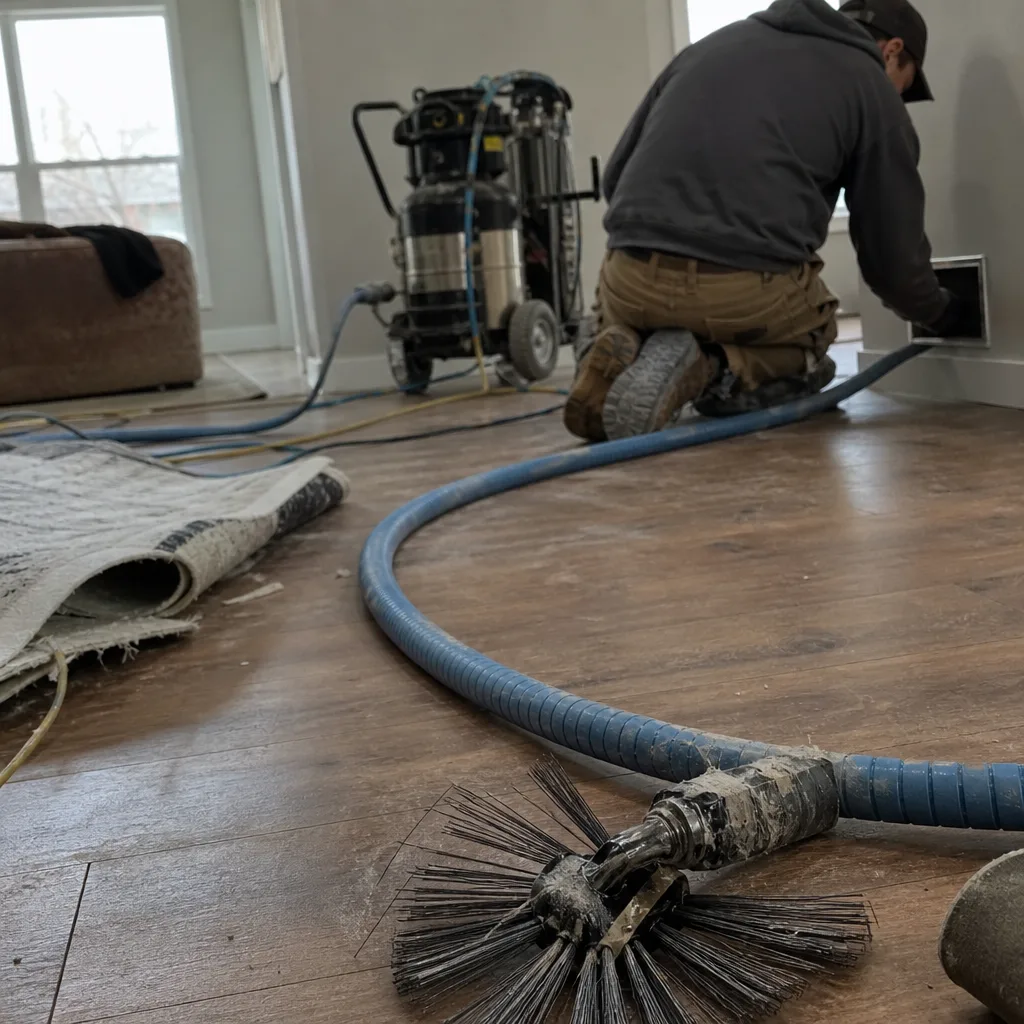 Before
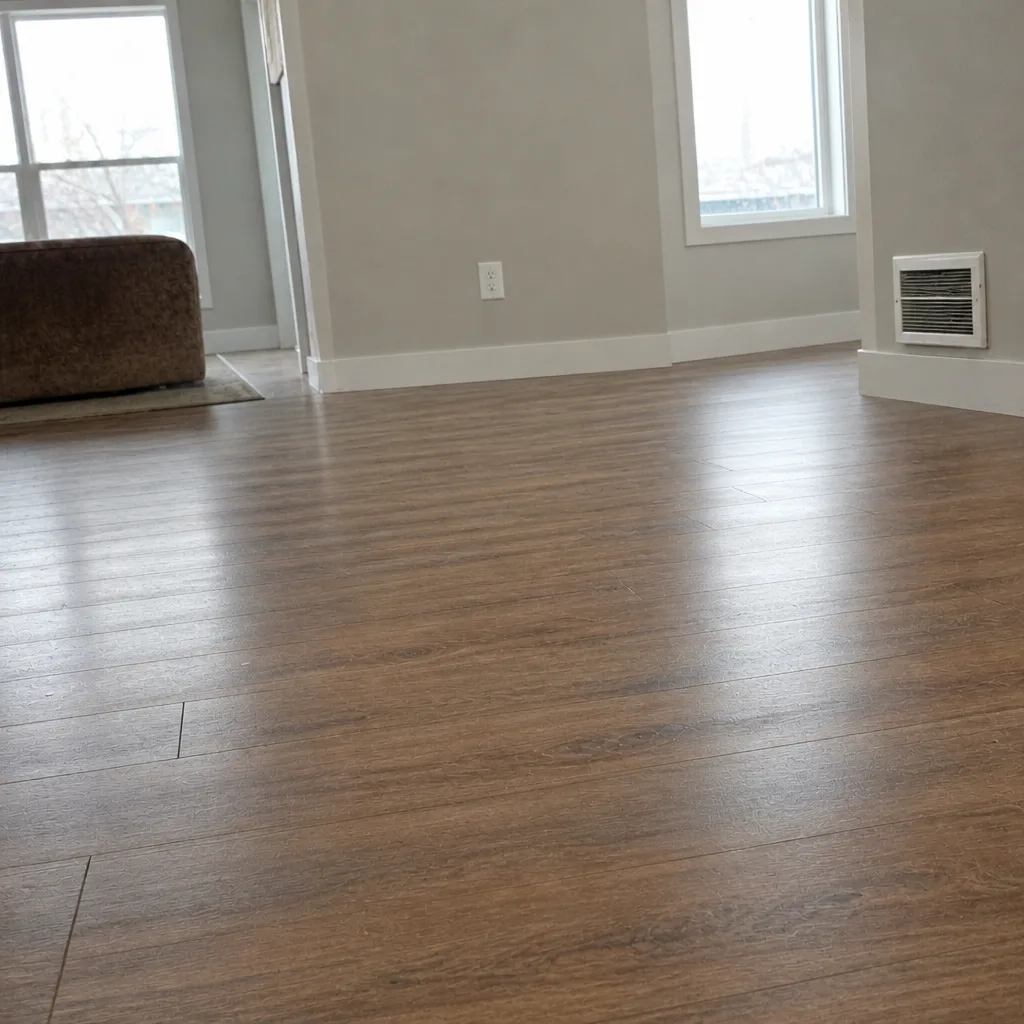 After
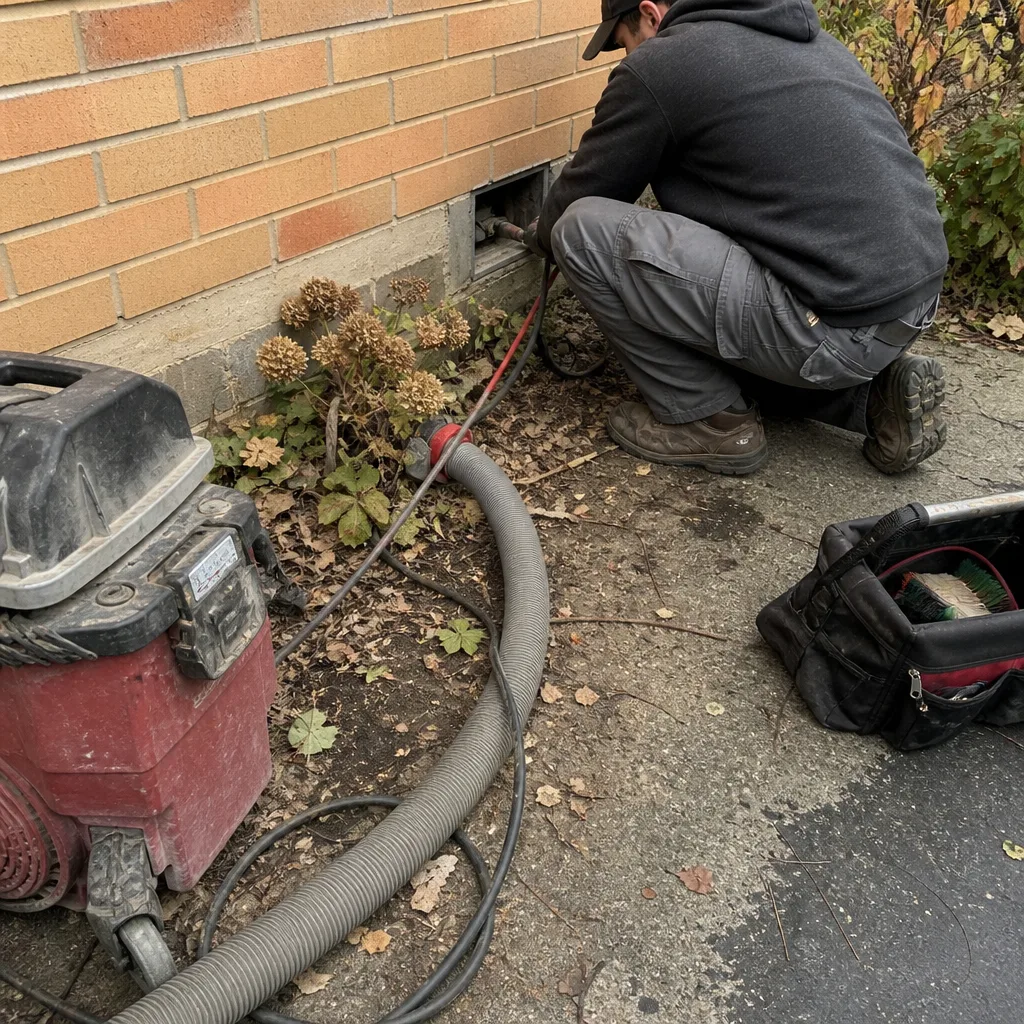 Before
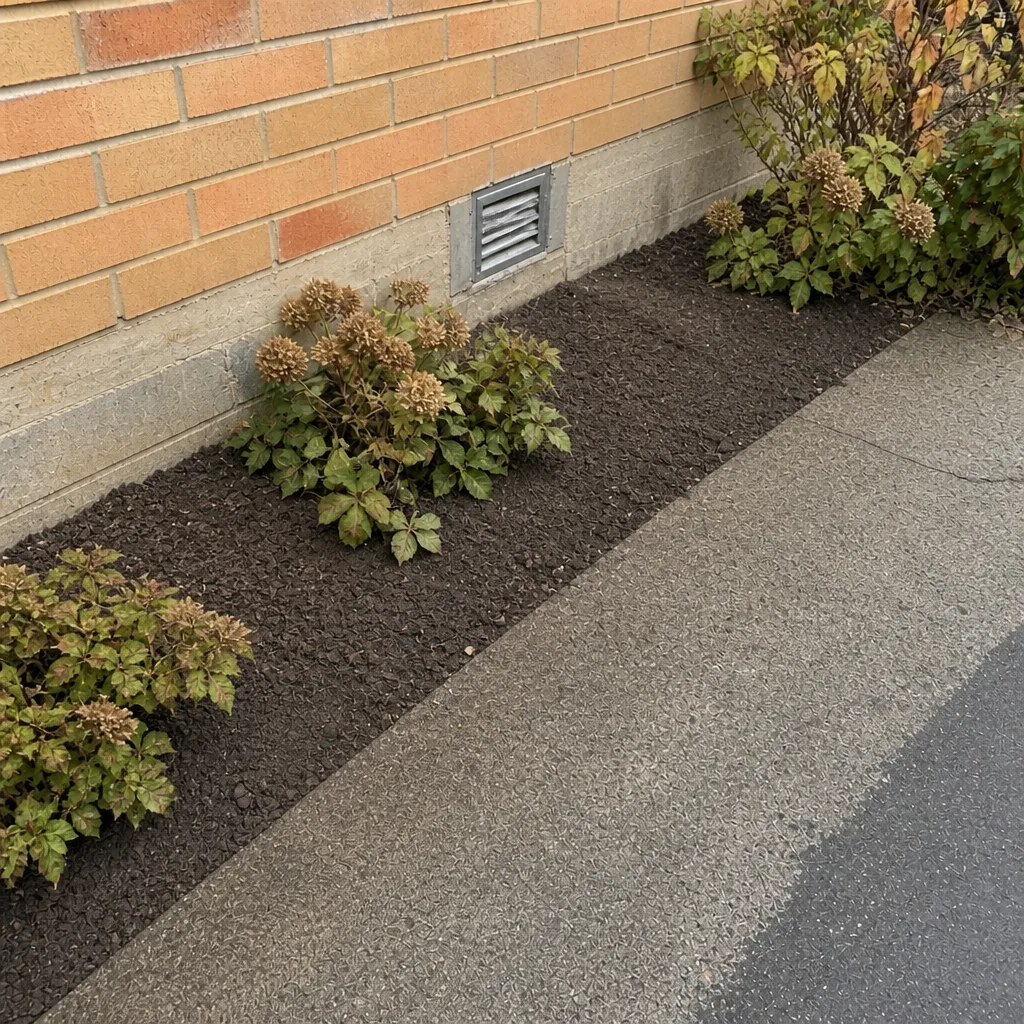 After
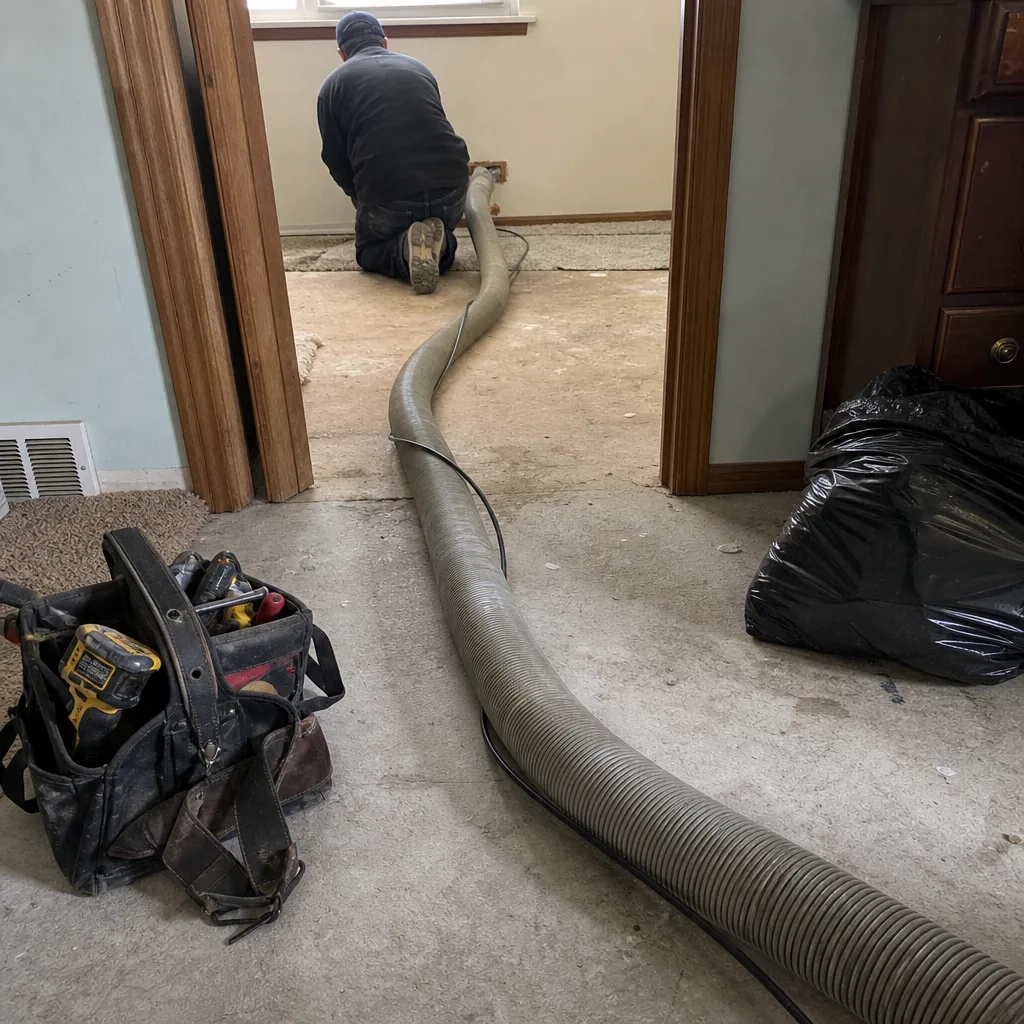 Before
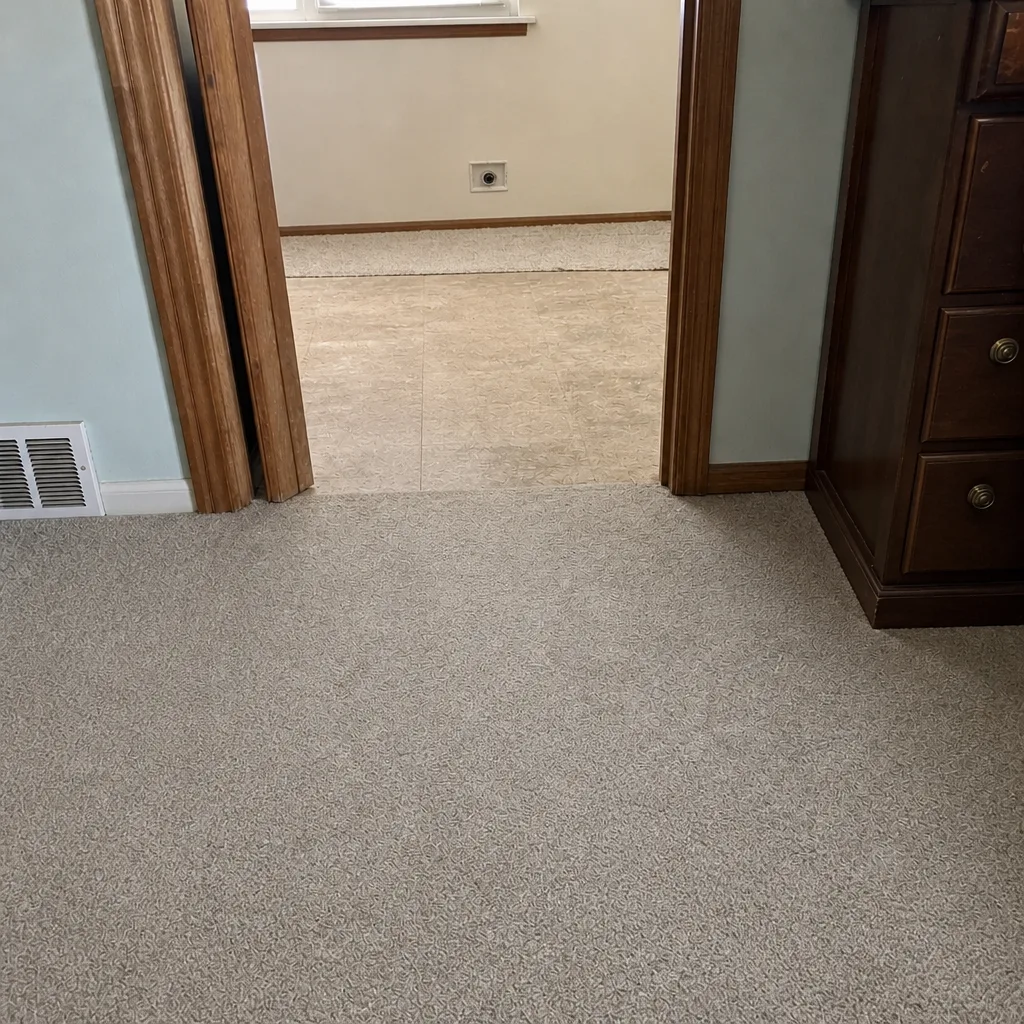 After
When to Call a Professional
Call a professional if you find any of the red-line conditions, if a filter loads unusually fast right after a remodel, if a musty smell returns within weeks of cleaning, or if your home is simply at the 3-to-5-year mark and you’ve never had a professional inspection. Also call if you’re unsure – a professional assessment is the cheapest way to find out whether the system needs real work.
Riverton Air Duct Cleaning offers free estimates in Riverton – call (844) 569-6963. We answer 24/7. Fast dispatch from 7am to 7pm, Sunday through Friday. Our technicians have up to 9 years of experience, and we show you what we found rather than just cleaning and leaving. One call covers it all, from Riverton Air Duct Cleaning specialties through duct repair and sealing, sanitizing, and air quality upgrades.
Frequently Asked Questions
Every 3 to 5 years is the standard interval for a typical home, but Riverton’s inversion months and frequent remodels shorten it for many households. If a filter loads in half the usual time or you notice airflow changes, clean sooner. Call (844) 569-6963 for a free assessment – estimates are free.
No. A shop vac can’t reach the duct interior and pushes dust deeper into the branches, which makes the next professional cleaning less effective. Contact cleaning needs professional equipment like Rotobrush, and high-efficiency vacuum uses Nikro. Call (844) 569-6963 to schedule it.
Visible mold in the ducts, a collapsed or disconnected flex section, a burning smell from the vents, or a musty odor that returns within weeks of cleaning. Any of these skips the schedule and warrants same-week attention. Call (844) 569-6963. We answer 24/7. Fast dispatch from 7am to 7pm, Sunday through Friday.
Yes. Any remodel produces a concentrated dust load, and a running HVAC system draws it into the return and distributes it. A quick inspection right after the work tells you whether the dust was contained. If the filter loads quickly, schedule a cleaning. Call (844) 569-6963 for an estimate.
Ask for before-and-after photos of your own ducts and a written record of what was found. A professional visit should include a duct inspection and sealing assessment, not just a cleaning. Call (844) 569-6963 to talk through what to expect.
Source removal with contact cleaning, high-efficiency vacuum and containment, an air handler inspection, a duct repair and sealing assessment, and a report of findings. That full picture is what separates a real service from a quick blow-and-go. Call (844) 569-6963 for a free estimate.
The Bottom Line
A duct maintenance routine works when it’s layered and honest. Check the filter monthly, inspect the visible system twice a year, and schedule professional cleaning every 3 to 5 years – then let local conditions shorten those intervals when they warrant it. Do the small tasks yourself, leave the interior work to a professional with Rotobrush and Nikro equipment, and keep a record so each visit is more accurate than the last. Treat a remodel as a trigger, and treat mold, collapsed duct, or a burning smell as a stop. Call (844) 569-6963 for a free estimate. We answer 24/7. Fast dispatch from 7am to 7pm, Sunday through Friday. Professional-grade equipment, not DIY workarounds.
Written by the team at Riverton Air Duct Cleaning.