
Last updated November 24, 2026
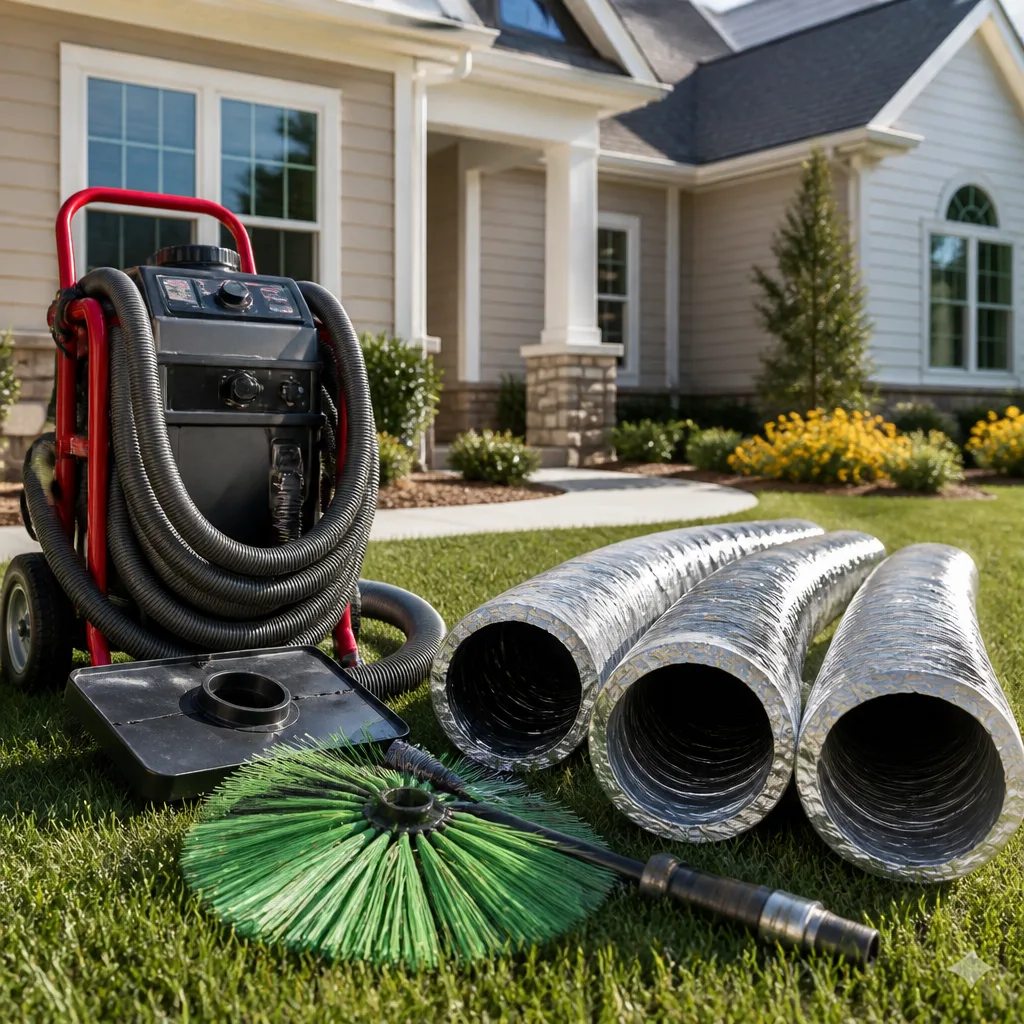 Whole-home duct cleaning
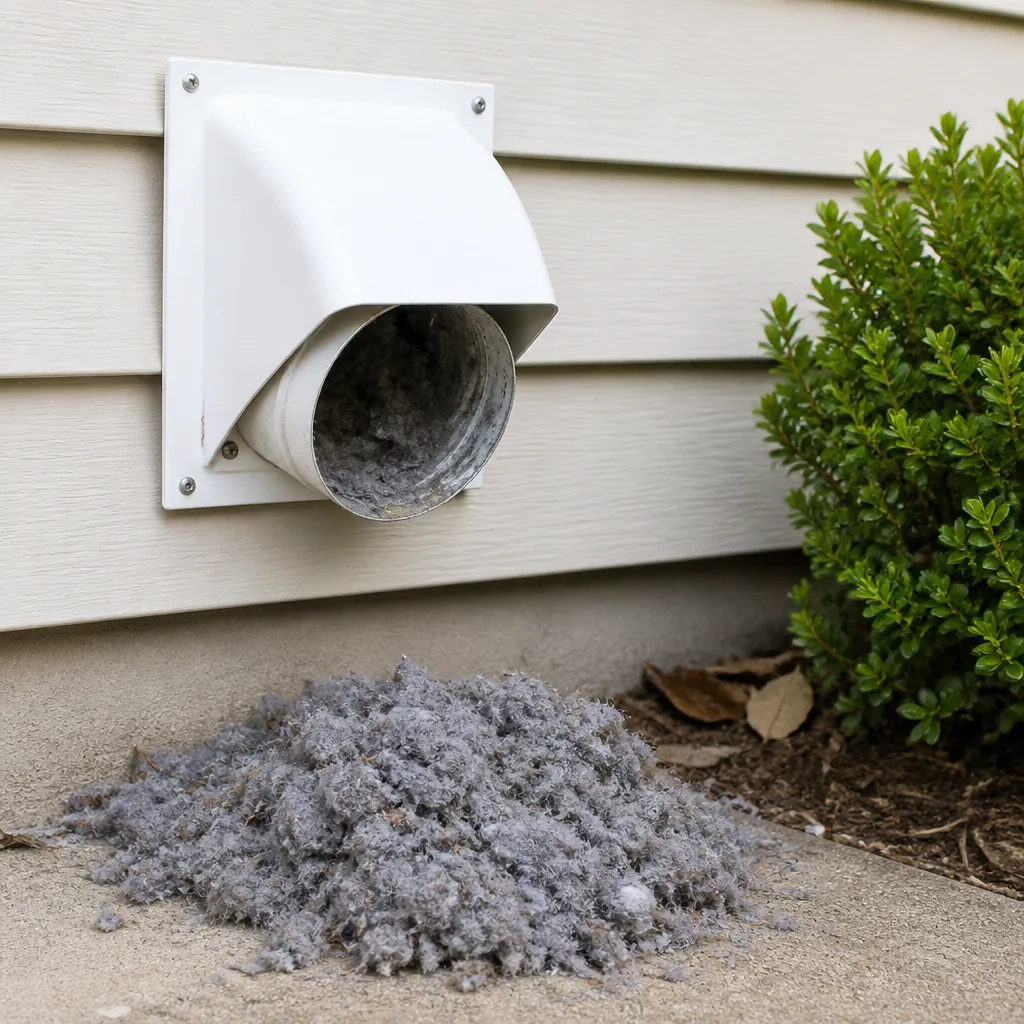 Dryer vent cleaning
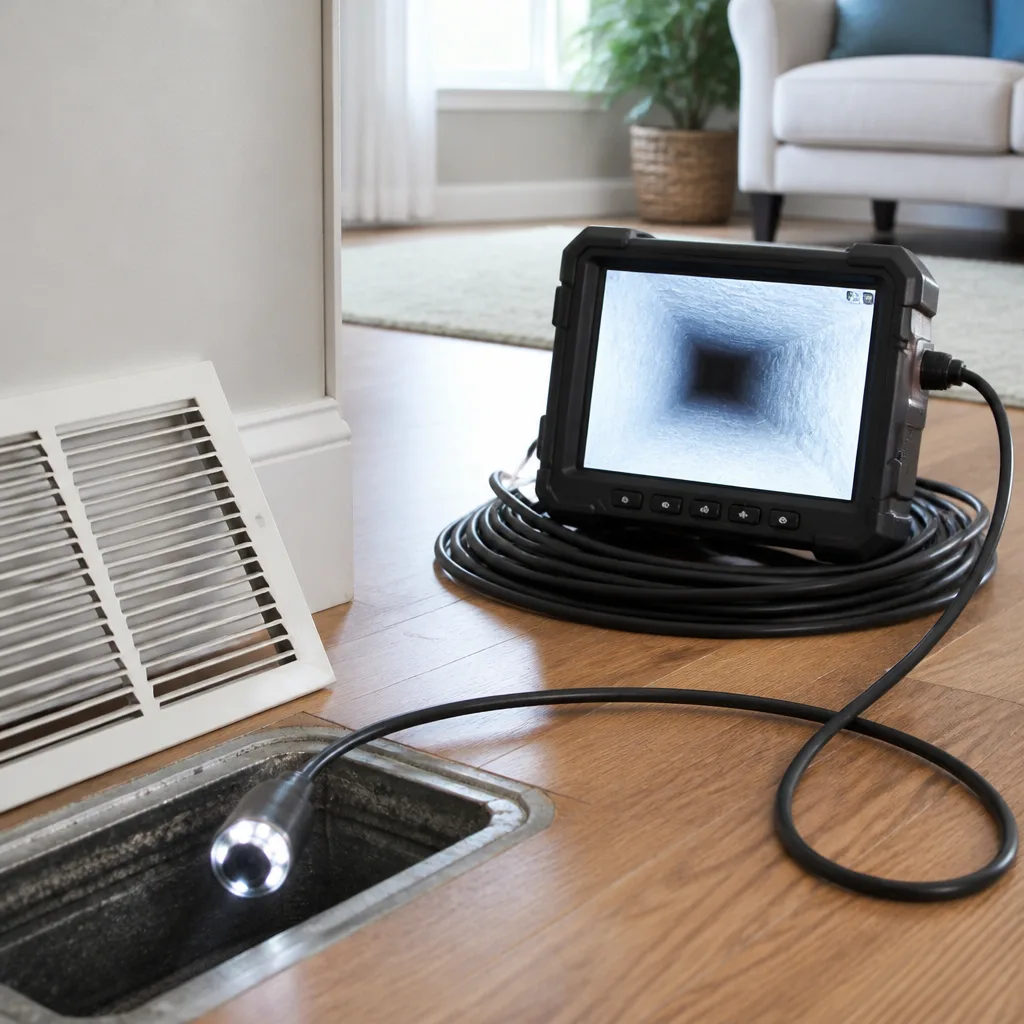 Camera inspection
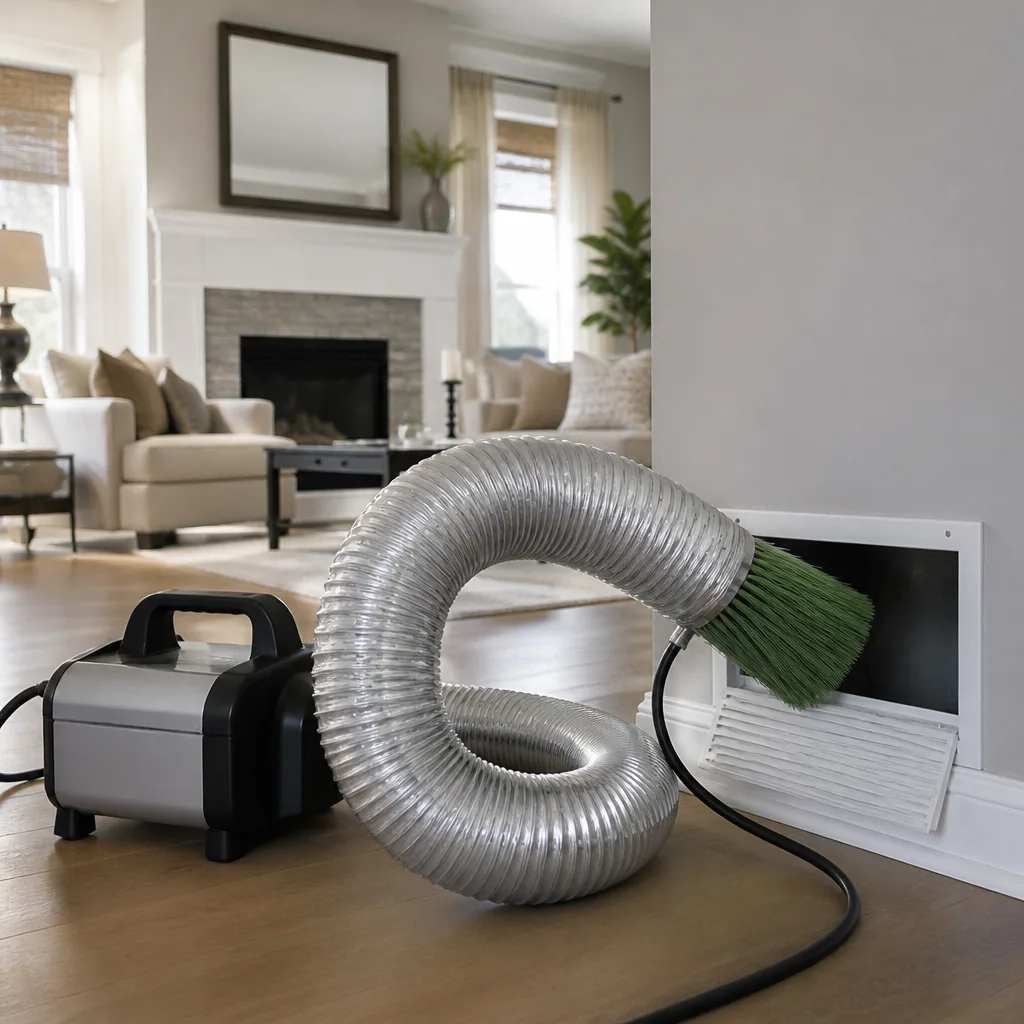 Sanitizing & deodorizing
Whole-system duct and dryer vent check with before-and-after photos - you see exactly what came out of your vents
That "$99 whole-house special" is a bait ad - the real number appears once they are in your hallway, or the "clean" is a shop-vac at the register. We photograph the inside of your ducts before and after instead.
Seasonal Air Duct Cleaning Care for Riverton: Year-Round Homeowner’s Guide
Most seasonal duct advice you’ll find online was written for a climate that doesn’t exist here. It assumes four evenly spaced seasons, moderate humidity, and air that clears itself out. Riverton doesn’t work that way. We sit in a valley that traps cold air and pollution against the Wasatch Front in winter, then spends late summer pulling wildfire smoke in from three states away. Those two conditions back up against each other in the same twelve-month cycle. A duct system here can load up with more particulate in six months than a national average homeowner sees in two years. This guide maps each season to the specific action that actually matters, and shows you how to build a maintenance calendar triggered by local air quality data rather than a generic reminder on your phone.
Quick Answer
Seasonal air duct care in Riverton follows the valley’s air, not the calendar on the wall. In practice that means a winter inspection during inversion season, a filter swap and register wipe-down within about 72 hours of any heavy wildfire smoke event, an HVAC startup check on the first cool morning of spring, and a return-air inspection before heating season begins in fall. The single most useful habit you can build is to treat Red Air Quality days and smoke events as your maintenance triggers, because they arrive here on their own schedule and they’re what actually loads up a duct system.
Styles & brands we work with
- Whole-home duct cleaning
- Dryer vent cleaning
- Camera inspection
- Sanitizing & deodorizing
Table of Contents
- Why Riverton’s Ducts Age Faster Than the National Average
- Winter: Inversion Season and the Recirculation Question
- Late Summer: The 72-Hour Wildfire Smoke Window
- Spring in Riverton: Cottonwood, Pollen, and the First AC Run
- Fall: Return Air, Construction Dust, and Heating Efficiency
- Building a Riverton Maintenance Calendar Around Air Quality Data
- A Step-by-Step Year at a Glance
- What You Can Do Yourself and What You Shouldn’t
Why Riverton’s Ducts Age Faster Than the National Average
The shape of this valley does most of the work. In winter, cold dense air settles along the Wasatch Front and a warmer layer traps it from above. That’s the inversion, and when it locks in, the air Riverton residents breathe is stagnant, particulate-heavy, and slow to clear. Salt Lake Valley Red Air Quality days get reported on the news because they’re the visible part of the story. The part homeowners don’t see is what happens inside the HVAC system during those stretches: the furnace pulls that same dirty air through the return, and whatever doesn’t get caught at the filter deposits along the duct walls, on the blower wheel, and on the evaporator coil.
Then summer arrives with wildfire smoke. Late-summer smoke events push fine particulate into the same valley, and it behaves the way fine particulate always does. It migrates. Coarse dust settles in the return boots and on register faces, but fine smoke particles ride the airstream deeper, into branches and plenum surfaces where a vacuum can’t reach them once they’ve bonded. That pattern is why air duct cleaning in Riverton is less about a once-a-decade deep clean and more about not letting two consecutive dirty seasons stack up untreated.
There’s a housing factor too. A lot of Riverton homes sit on newer construction with flexible duct runs, and flexible duct has a ribbed interior that catches particulate better than smooth sheet metal does. Add long return runs and a system that was sized for the house rather than for the air quality, and a duct network here is working harder than the same square footage would be somewhere with cleaner ambient air. That’s not a knock on Riverton. It’s just the local baseline, and it’s the reason a seasonal rhythm beats a whenever-I-remember approach.
One more thing worth naming: our technicians have up to 9 years of experience working on systems along the Wasatch Front, and the pattern they describe is consistent. Duct systems in this valley don’t fail from age. They load up from the season that just happened.
Winter: Inversion Season and the Recirculation Question
When the valley fills with trapped air and Red Air Quality days get announced for the Salt Lake Valley, the question we get most is whether to run the HVAC fan more or less. The answer isn’t a simple one. What you want during an inversion stretch is to keep the system from pulling outside air in, while still filtering what circulates inside.
Here’s what to think through during a winter inversion:
- Keep the fan circulating, not the fresh-air intake open. If your system has a fresh-air damper or an economizer tied to a thermostat setting, close it during Red Air Quality days. You’re not opening a window to clean the room, you’re opening a window to the smog.
- Run the blower on low for longer stretches. Continuous low-speed circulation through a good filter pulls more particulate out of the air than blasting the fan for ten minutes.
- Watch filter pressure drop, not filter appearance. A filter can look gray on the surface and still be flowing fine, and a filter can look clean and be nearly loaded. If airflow from your registers feels weak, change it. On inversion days, filters load noticeably faster.
- Don’t schedule a duct cleaning mid-inversion. Cleaning stirs up particulate, and opening the system while valley air is red is the wrong trade. Wait for a clear stretch, or schedule now and have it booked for when the valley lifts.
The inversion question also changes when you should inspect instead of clean. In most climates, a mid-winter inspection is overkill. Here it’s not, because by mid-January the system has already run through a heavy heating stretch and part of an inversion season. If you have allergy or asthma concerns in the household, or if the furnace has been running hard since October, a mid-season inspection is a reasonable way to see how much has accumulated before spring. What we find at that inspection tells us whether a full HVAC cleaning needs to be scheduled, or whether filter discipline will carry the system through the rest of the heating season.
Filters and Inversions
A filter swap during a Red Air Quality stretch isn’t wasted effort, but it’s a small-scale defense. The filter is catching what reaches it. Particulate that settles in the return boots never gets that far. That’s the reason we suggest a filter change every few weeks during a prolonged inversion rather than a strict 90-day rule. The 90-day rule was written for someone whose outdoor air is clean. Winter air in this valley isn’t.
Late Summer: The 72-Hour Wildfire Smoke Window
Wildfire smoke seasons have become reliable enough in the West that they deserve a slot in your seasonal calendar. When a heavy smoke event rolls into the Salt Lake Valley, the air can be acrid for days. What most homeowners do is close the windows and wait it out. The part almost nobody does is the follow-up. The 72 hours after a heavy smoke event are the window when a filter swap and a register wipe-down actually prevents smoke particulate from migrating deeper into the duct system.
Why the 72-hour window? Fine smoke particulate is small enough that a standard filter catches some of it. The rest rides past the filter and lands on the return-side surfaces, register faces, and duct walls, where it’s still loose and still cleanable. Once it’s bonded to a duct wall and then cycled through heating and cooling for a couple of weeks, it’s essentially free particulate that the next airstream picks up and delivers to the living space. Wiping and swapping early keeps it from getting that far.
What the 72-hour response looks like:
- Swap the filter within a few days of the smoke clearing. Not during the event if you can help it. Wait until the air visibly clears, then pull the filter and replace it.
- Wipe down every register face with a damp cloth. This is the single highest-yield five-minute action you’ll take all year. The register face is where the fine particulate settles in the largest quantity.
- Vacuum around return grilles and boots with a HEPA-equipped vacuum. A standard shop vac blows fine particulate back into the air. HEPA captures it.
- Watch for the one-month tell. If a musty or smoky smell returns within a month, the accumulation went deeper than surface level and needs more than a filter change.
Why This Matters More in Riverton Than the Coast
Riverton gets smoke from fires that can be hundreds of miles away. Between the valley’s tendency to trap air and the region’s wildfire pattern, a summer can deliver several smoke events in a row. Two or three back-to-back events without a filter swap and a register wipe means the second event’s particulate lands on top of the first event’s. That’s how a filter that a homeowner assumes is doing its job ends up not doing its job.
In our experience, a lot of the musty smell complaints that arrive in early fall were seeded by an untreated August smoke event. Sometimes the fix is a deeper air duct cleaning service. Sometimes it’s sanitizing after the cleaning. Either way, we take samples before and after so you can see what came out.
Spring in Riverton: Cottonwood, Pollen, and the First AC Run
Spring along the Wasatch Front is a two-part event. First comes the cottonwood and pollen window, then comes the first real warm stretch that kicks the AC on. Those two parts stack, and the sequence matters more than either one alone.
The pollen window is when cottonwood fluff and fine pollen compete for filter capacity. It’s also when the return side of the duct system is at its dirtiest because it just finished carrying six months of winter particulate. A filter swapped in March or April catches pollen on the way in, but only if the system behind the filter isn’t already loaded. If the ducts are carrying last winter’s accumulation, the spring filter is fighting a losing battle.
The first AC run of the year is a diagnostic event, and it’s worth paying attention to rather than just flipping the thermostat. What to watch on that first cool run:
- The smell. A musty or “hot dust” smell blowing from the registers on the first run is the system burning off what settled during the heating season. If it clears in fifteen minutes, that’s normal. If it lingers for days, it’s a sign of duct-side accumulation.
- Airflow at the farthest register. Compare it to last fall. If it’s noticeably weaker, the coil or the return is loaded.
- Condensate behavior. Watch the drain line for the first full cooling cycle. If the coil was dust-loaded through winter, the drain pan can hold standing water that mold loves.
- Cold spots that weren’t cold spots before. Uneven cooling on the first warm day often means airflow restriction rather than an equipment problem.
What the First AC Run Tells You
Think of the first AC run as a health check on your whole air system. You’re not looking for a failure, you’re looking for a difference from last year. If the first run smells like dust and clears, you’re fine. If it smells and doesn’t clear, or if airflow has dropped, that’s your cue to schedule a service call before peak summer heat, when a struggling AC system is a much more expensive problem to discover. A spring filter swap plus a professional inspection answers most of these questions in one visit.
Fall: Return Air, Construction Dust, and Heating Efficiency
Fall prep means two things in Riverton: catching the summer’s accumulation before heating season locks the system in, and understanding that the connection between a dirty return and your energy bill is a slow one. Here’s a part most homeowners don’t see until the bill arrives.
Summer construction dust is the local wild card. New neighborhoods around Riverton stay under construction longer than most people expect, and construction dust is finer and more aggressive than household dust. It gets pulled into the return from the outside air intakes and through gaps in the building envelope. It accumulates on the return-side duct walls and on the heat exchanger’s exterior fins. During heating season, that accumulation acts as insulation on the heat exchanger surfaces, which means the system works harder to deliver the same warmth. The homeowner doesn’t notice anything wrong until the January bill comes in higher than last year and there’s no obvious reason why.
The fall prep sequence, in order:
- Inspect the return side of the system, not just the supply. Most homeowners focus on the registers where air comes out. The return side is where the accumulation lives.
- Check the heat exchanger exterior before heating season. Dust that settled over summer bakes on in October and November. If the heat exchanger’s fins are visibly loaded, a HVAC cleaning should happen before the system fires for the season.
- Look for leaks at duct joints before heating pushes pressure through them. Leaky return joints pull unconditioned air from crawlspaces and walls. In Riverton, that air carries construction dust and, on some properties, attic particulate. That’s the reason duct repair and sealing is part of a proper fall inspection.
- Swap the filter one more time after the summer-to-fall transition. Even if you swapped after a smoke event, the fall swap catches whatever the summer brought in after that event.
- Book a professional deep clean if the system hasn’t been serviced since before summer. Late summer smoke plus spring pollen plus winter heating accumulation, run for a full year, is where the cleaning interval actually starts to matter.
The Other Fall Item: Dryer Vent
Fall is also when dryer vent cleaning belongs on the schedule. Winter means the dryer does more per week (heavier loads, thicker fabrics), and lint accumulation in the vent run is a fire hazard year-round but especially when the household is running the dryer more. We treat this as a standalone safety service, not an add-on. Lint screens catch a fraction of the lint the dryer produces. The rest ends up in the run, and by late fall the run has had a full year to pack.
Building a Riverton Maintenance Calendar Around Air Quality Data
A calendar-based maintenance schedule assumes clean seasonal transitions. Riverton doesn’t deliver those. Some years the smoke season is heavy, some years it’s not. Some winters the inversion is a minor inconvenience, some winters it’s a multi-week problem. The practical answer is a maintenance calendar triggered by local air quality index data instead of by month.
Here’s how to build it:
- Set a notification in any of the air quality apps for your zip code. Set two triggers: any day the AQI reaches “Unhealthy for Sensitive Groups,” and any day it reaches “Unhealthy.” Those are your event days.
- During an event (AQI at Unhealthy or above), do nothing to the system. Leave the filter in place. If the event runs more than a week, change the filter once at the end, not during.
- Within 72 hours after the event ends, run the smoke response: filter swap, register wipe, HEPA vacuum on the return grille.
- Log every event that reaches Unhealthy. Two or more Unhealthy events in a season is your trigger to schedule a professional inspection rather than waiting for the annual slot.
- Anytime you see three consecutive days of AQI at “Moderate” or worse in winter, check filter pressure drop at your registers. Weak airflow is your cue for an early filter change.
- Yearly, schedule a full air duct cleaning and inspection after the smoke season ends and before heating season starts. That’s the fall window: late September into early October.
One advantage of using AQI as a trigger is that it accounts for the two events that calendar-based maintenance ignores: smoke and inversion. Neither one cares whether it’s the second Tuesday of the month. The AQI cares, and the AQI is a signal your duct system already responds to.
A Step-by-Step Year at a Glance
If you want the whole year in one place, here’s what the Riverton cycle looks like mapped to the seasons and to the events that define them:
- January through February (inversion season): Filter swaps more often than the suggested interval when AQI stays at Moderate or worse. Mid-season inspection if the household has respiratory concerns or the system is heavily used.
- March through April (pollen window): First filter swap of the year before pollen hits its peak. Check registers for last winter’s dust. Schedule any duct cleaning and sealing now if last fall’s inspection flagged anything.
- May through June (first AC runs): Watch the first full cooling cycle for smell, airflow change, and condensation behavior. Book an AC-side HVAC cleaning if the first run doesn’t clear.
- July through August (wildfire smoke): Register and filter response within 72 hours of any heavy smoke event. Log the event. Two Unhealthy events in the season means schedule a professional inspection.
- September through October (pre-heating prep): Full HVAC cleaning, duct inspection, and duct repair and sealing if leaks were found. Dryer vent cleaning should land in this window too.
- November through December (heating transition): Filter swap at the start of the heating season, then again on the first Red Air Quality day of the winter. Watch for odors on the first full heating run.
The Two Events That Define the Year
Notice that the year has two anchor events, not four. The end of smoke season and the start of heating season are the two transitions where the system’s condition actually changes. Spring and mid-winter are the checkpoints between them. Most seasonal guides get this backwards by treating all four seasons equally.
What You Can Do Yourself and What You Shouldn’t
Some of the seasonal work is genuinely DIY. A lot of it isn’t, and knowing the line matters for both safety and for whether the work actually accomplishes anything.
Reasonable DIY work:
- Filter swaps. Any homeowner can do these and they’re the single highest-value seasonal task.
- Register face wipe-downs after smoke events. Damp cloth, five minutes per register, done.
- HEPA vacuuming of the return grille face and the floor around it.
- Watching AQI data and logging events. This is the whole insurance policy for the rest of the schedule.
Not DIY work:
- Anything involving the coil, the blower wheel, or the heat exchanger exterior. These require the system to be safely disassembled and, in the case of the heat exchanger, carry real risk if the work is done wrong.
- Duct interior cleaning, including the supply and return branches past the first fitting.
- Duct sealing and repair. Improper sealing can push the system out of balance and create pressure issues that weren’t there before.
- Dryer vent cleaning past the first few feet of the run. This is a fire-safety service and it needs the right equipment.
- Anything involving gas connections, electrical service to the air handler, or refrigerant lines.
What Professional Equipment Actually Does
Consumer vacuums and shop vacs move air, but they don’t have the airflow or the filtration to clean a 1,500 square-foot duct system. The tools that actually do the work are different in kind, not just in size. A Rotobrush contact-cleaning system scrubs the duct wall as it advances, which is what removes bonded particulate rather than just dislodging loose dust. A Nikro HVAC vacuum pulls the system into negative pressure so the loosened material actually leaves rather than redistributing into the room. Abatement Technologies containment units keep the work zone sealed while the cleaning runs. That trio of tools is the difference between cleaning a duct and clearing the air in it for a few days.
Common Mistakes to Avoid
- Treating all four seasons as equal. Riverton’s dirt-loading events are concentrated in winter inversion and late summer smoke. If your maintenance calendar spreads equal effort across all four seasons, it’s spending attention on the wrong months.
- Skipping the register wipe after a smoke event. The five-minute wipe is the highest-yield action of the year, and it’s the one most homeowners forget. Fine particulate is still cleanable at the register face and bonded into the duct wall by the time a week has passed.
- Assuming a filter change is the whole answer. A new filter catches what reaches it. It doesn’t remove what’s already settled in the return boots and duct branches. A spring filter swap on top of a dirty duct system is filtering air on its way through a contaminated pipeline.
- Scheduling a cleaning mid-inversion. Opening the system on a Red Air Quality day stirs up particulate and pulls in more valley air. Wait for the inversion to lift, or book now for a slot after it does.
- Ignoring the first AC run of the year. The first cool morning is your free diagnostic. Smell, airflow, condensation behavior: if you pay attention on that one run, you catch most problems before they become peak-summer emergencies.
- Overlooking the dryer vent in the fall. It’s the same category of work but a different system and its own fire-safety concern. Treating it as an add-on years later is the mistake, not scheduling it once a season.
- Believing a cheap teaser price is a real estimate. A clean, honest duct cleaning estimate is based on the whole system, not a per-vent number, and the written estimate is the price you pay. A quote that sounds unusually low has a reason, and the reason usually doesn’t get explained until the technician is on-site.
What About Air Quality Upgrades?
Once the system is clean, seasonal maintenance gets easier because the starting condition each season is better. That’s also the right time to consider air quality upgrades. If your filter needs a different housing or your system would benefit from a media filter cabinet or a whole-home air cleaner, we work with Honeywell and Aprilaire equipment, and we install Guardsman protections after a cleaning. The point of installing them after the cleaning is simple. Adding a filtration upgrade to a dirty duct system just filters air through a dirty system.
See the difference
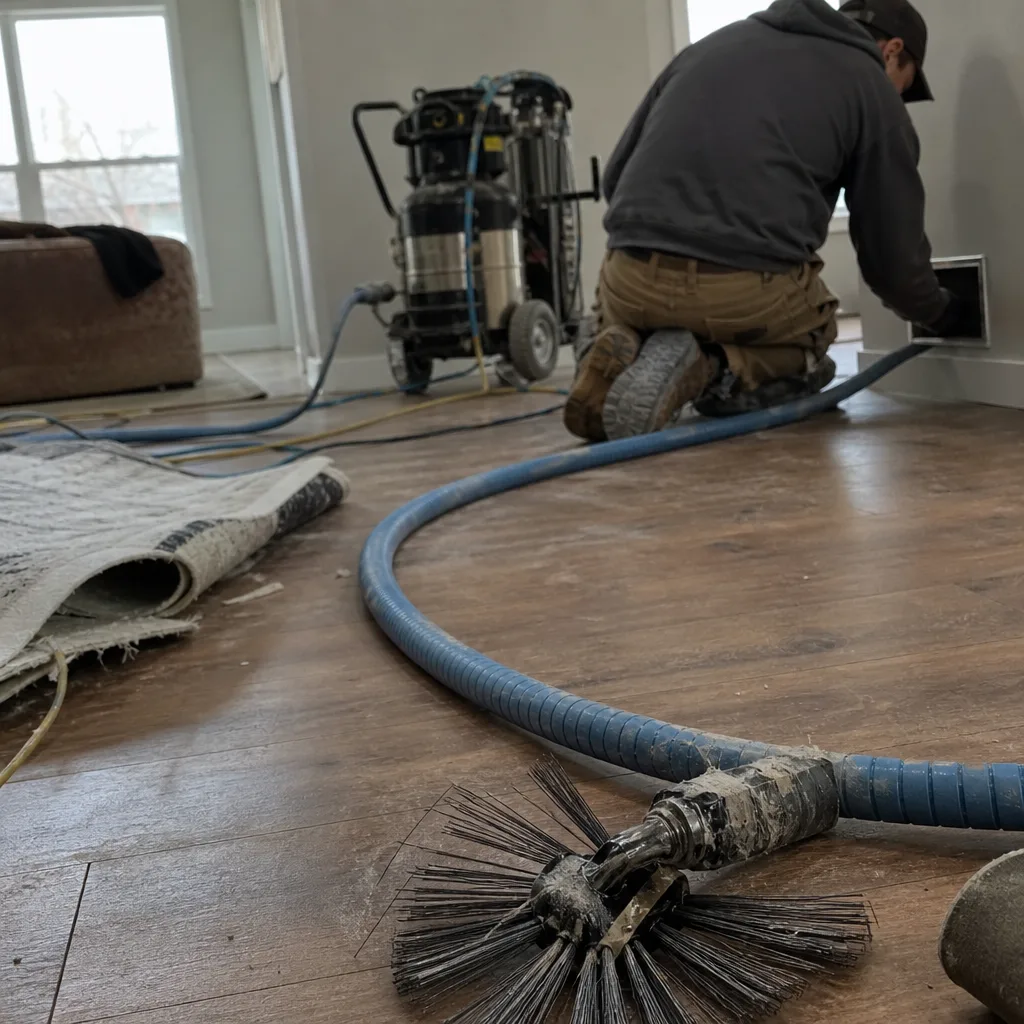 Before
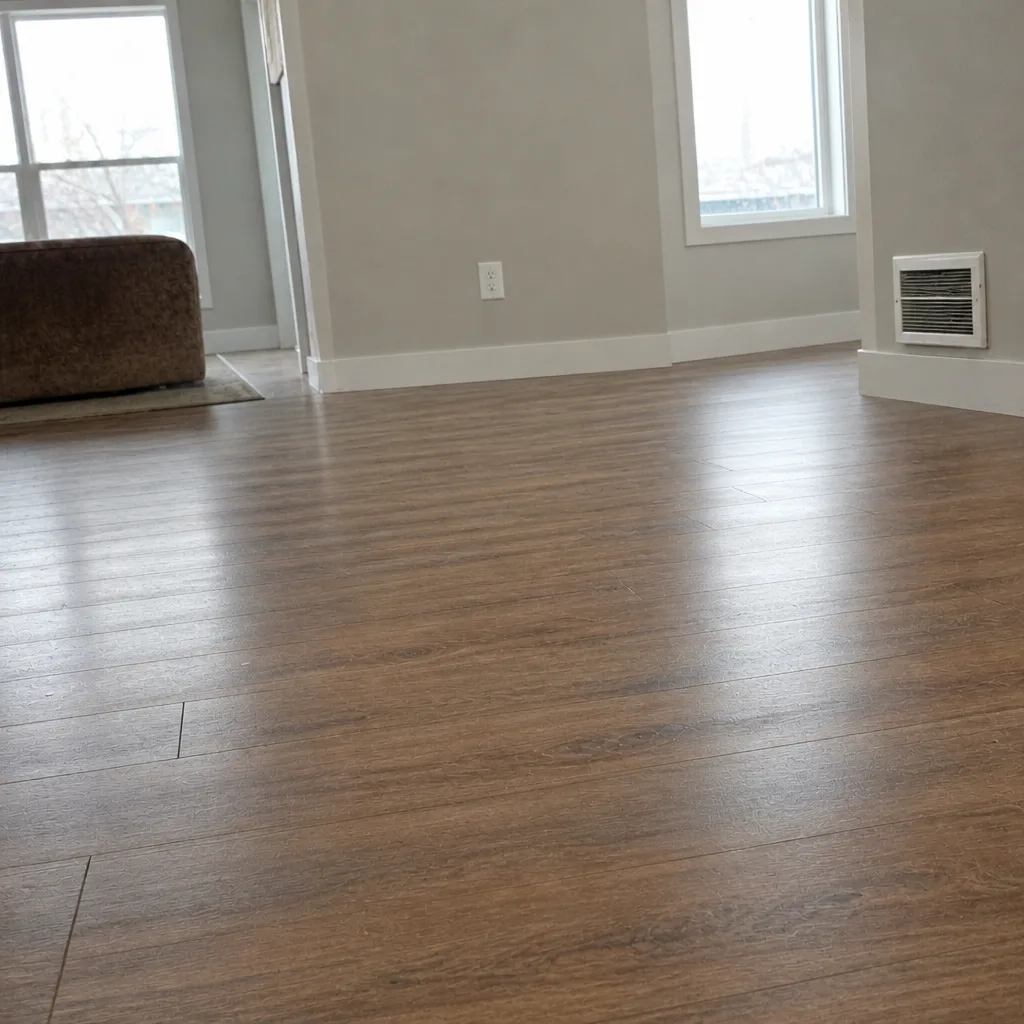 After
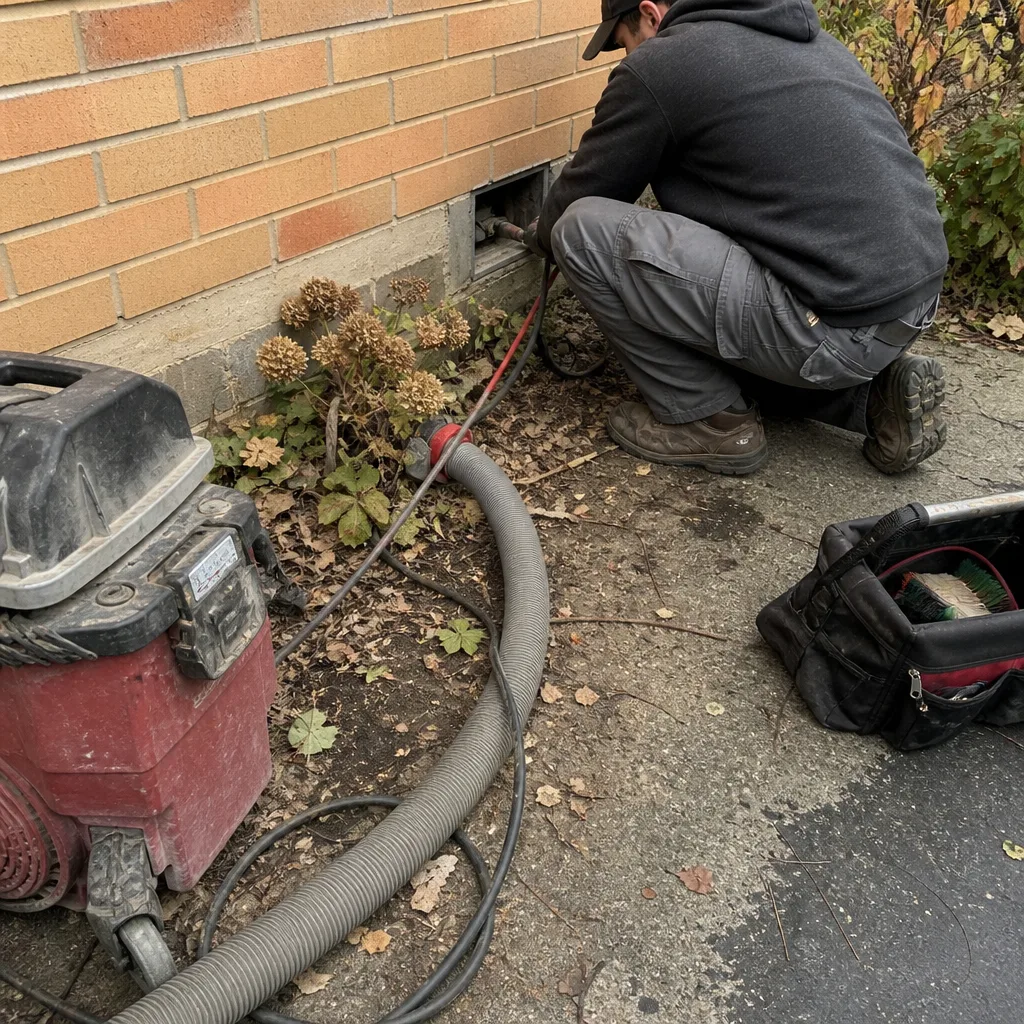 Before
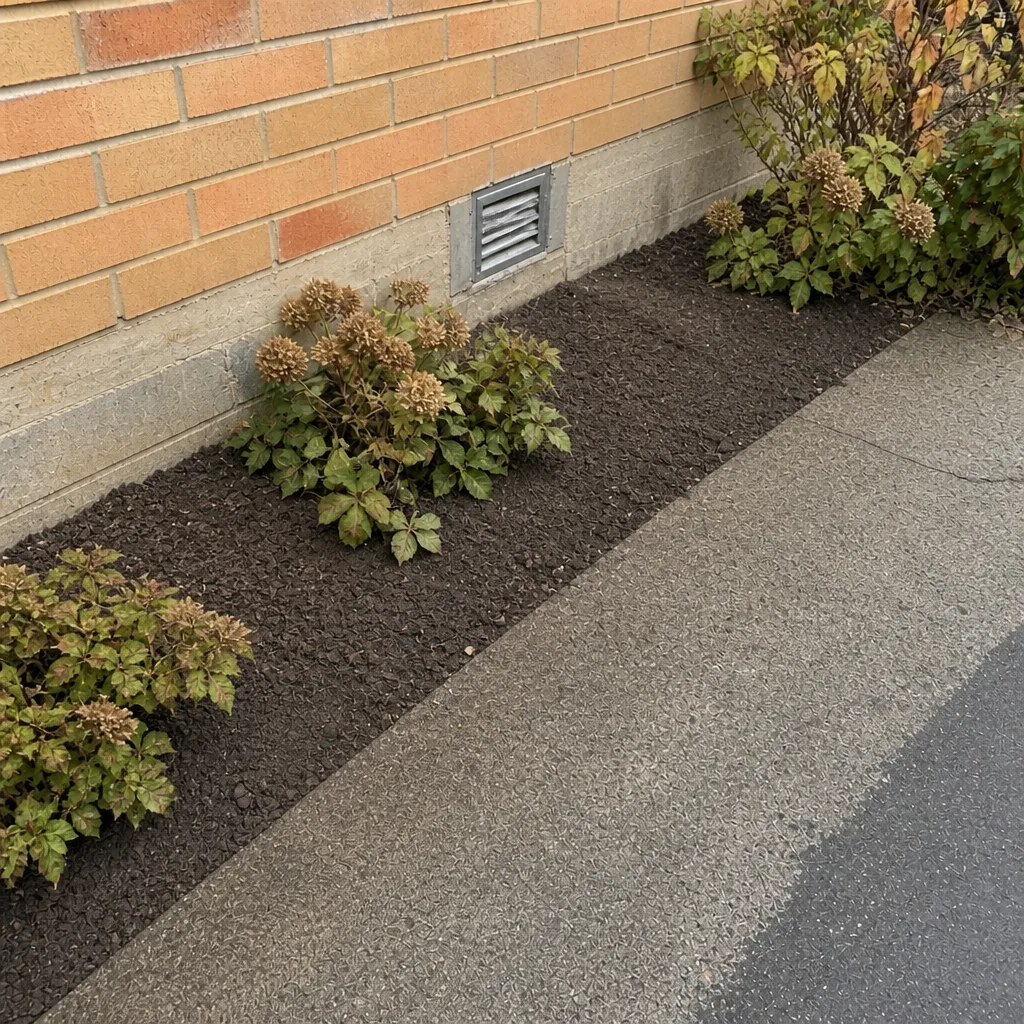 After
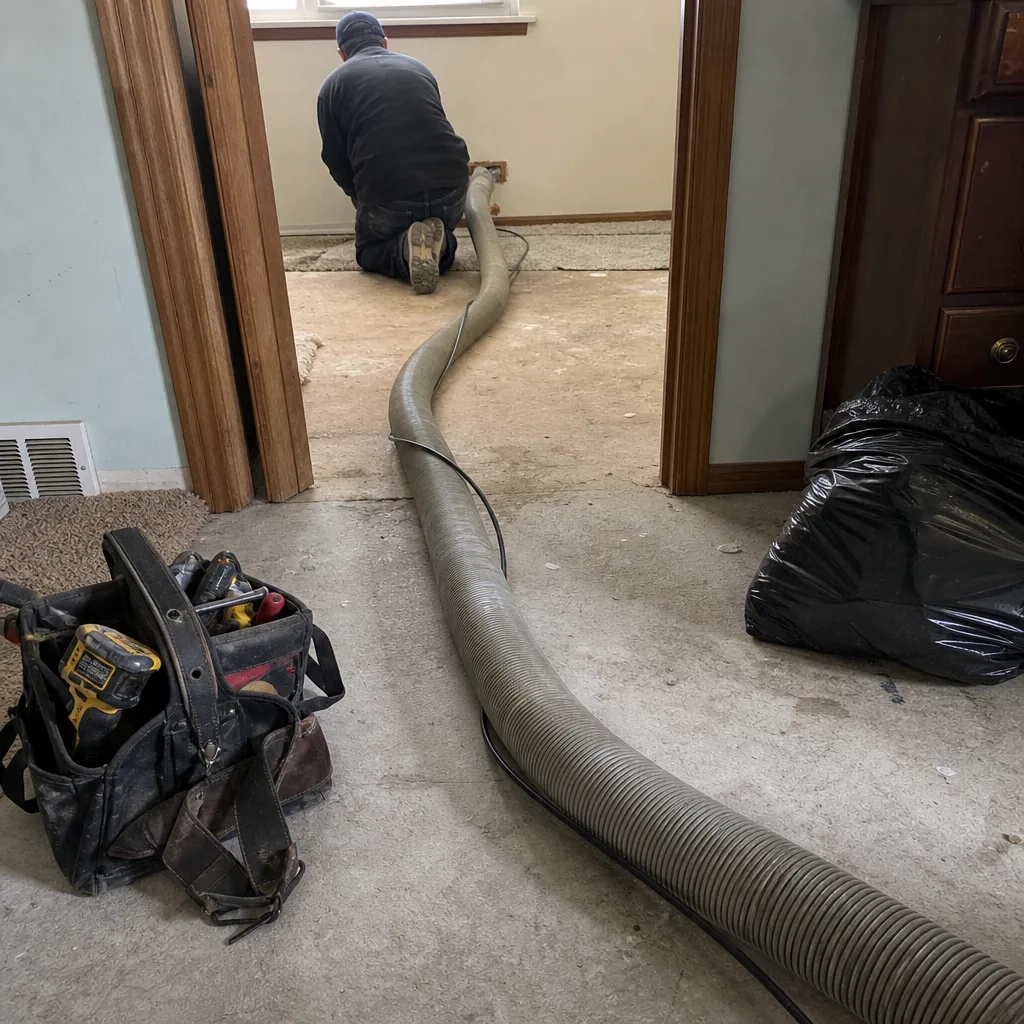 Before
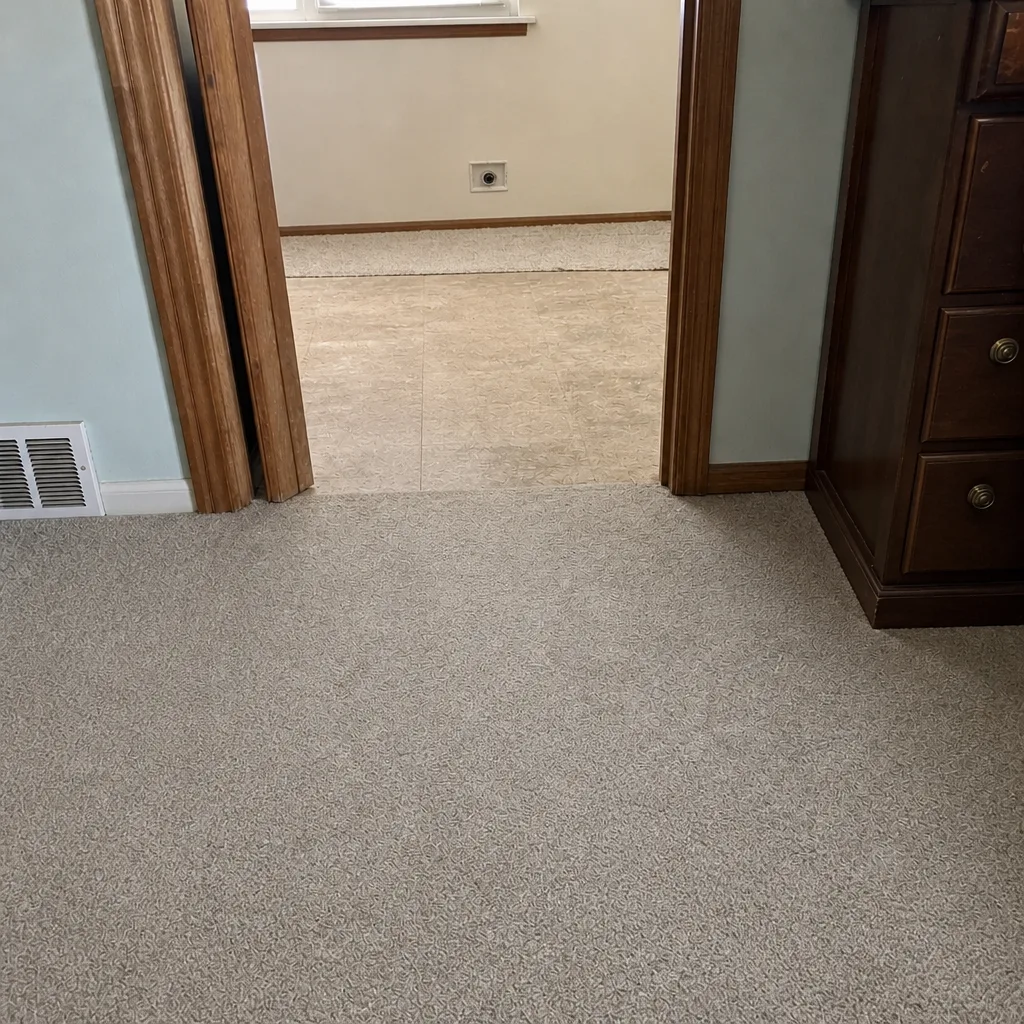 After
When to Call a Professional
Not every situation needs a service call. Some do. The ones that need a trained technician rather than a filter and a vacuum:
- A musty or smoky smell that returns within a month of a filter swap and register wipe-down.
- Visible dust blowing from the registers minutes after the system starts a heating or cooling cycle.
- Weak airflow at the farthest register compared to last season, not explained by a filter change.
- The first AC run of the year producing an odor that doesn’t clear within a typical cycle.
- A duct inspection finding leaks at joints, sagging flex runs, or disconnected supply branches.
- An energy bill jump from one heating season to the next with no change in household usage.
- A dryer that takes noticeably longer to dry a load than it did last year, or that produces the smell of warm lint after the cycle ends.
Every case above is a different problem under the hood, and the right response depends on what a technician actually sees. We show you what we found before we recommend anything, and we give a flat price per system before the work starts, so the number in the estimate is the number on the invoice. Before-and-after photos of your own ducts go with the service. Riverton Air Duct Cleaning offers free estimates in Riverton, so call (844) 569-6963. We answer 24/7. Fast dispatch from 7am to 7pm, Sunday through Friday, and we’re closed Saturday.
Frequently Asked Questions
Most Riverton homes do well on an annual cycle, timed to the fall window after smoke season and before heating season. Homes with pets, allergy or asthma concerns, or heavy winter heating use often benefit from an inspection mid-winter as well, particularly after a run of Red Air Quality days. The AQI-triggered schedule we outline above is a better guide than a strict annual rule, because it responds to what the valley actually delivered that year. Call (844) 569-6963 and we can talk through what your house needs.
Yes, and it’s the most underappreciated seasonal effect in this valley. During an inversion, the air Riverton residents breathe stays stagnant and particulate-heavy for days or weeks at a time, and the furnace pulls that same air through the return side of the system on every cycle. Whatever the filter doesn’t catch deposits on duct walls, the blower wheel, and the coil. Multiple winter inversions in a row load the system faster than most homeowners expect. A mid-season inspection is a reasonable way to see whether an early cleaning is worth it.
Within 72 hours of the smoke clearing, swap the filter, wipe down every register face with a damp cloth, and HEPA-vacuum around the return grilles. That sequence prevents fine smoke particulate from migrating deeper into the duct system, where it can bond to the walls and keep recirculating for months. If a smoky or musty smell comes back within a month of that response, the accumulation went past what a filter and a wipe can reach and needs a professional cleaning. Call (844) 569-6963 for an inspection and free estimate.
Because they’re not pricing the same job. A very low quote is usually a per-vent price that becomes a much larger invoice once the technician is on-site and finds what needs to be done. A real estimate is based on the whole system, and it’s given in writing before any work starts. Ask what equipment the company uses, whether the price covers the full system or only a set number of vents, and whether before-and-after photos are included. We do all three, and our estimate is the price you pay.
Ask for before-and-after photos of your own ducts. That’s the standard we hold ourselves to, and it’s the reason we take photos throughout the job. A company that can’t show you what came out of your system didn’t necessarily do the work. You should also see the equipment in action: contact cleaning with a Rotobrush, negative-pressure capture from a Nikro HVAC vacuum, and containment on the work zone. Those tools leave a visible trail.
Not necessarily at the same time, but it belongs on the same seasonal schedule. Fall is the practical window for both, because the dryer runs heavier in winter and lint accumulation in the vent run is a genuine fire concern. We treat dryer vent cleaning as its own service, done with the same professional equipment standard as the duct work, because a dryer vent is a different system with a different failure mode. It’s worth scheduling once a year. Call (844) 569-6963 to set it up alongside your duct service.
The Bottom Line
Seasonal duct care in Riverton isn’t about four evenly spaced reminders. It’s about the two conditions this valley actually delivers: winter inversion and late summer wildfire smoke, with pollen and construction dust filling the gaps between them. The AQI-triggered calendar we’ve laid out handles both events without overburdening the routine. Filter swaps, register wipe-downs, and a HEPA vacuum are the DIY half. The deeper work, from full-system cleaning to duct repair, sealing, dryer vent service, and air quality upgrades, is what a professional service is for. The single habit that changes everything else is treating Red Air Quality days and smoke events as your maintenance signals. Your duct system already responds to them, and matching that response on the calendar side is the whole game. Written by the team at Riverton Air Duct Cleaning.